
EU COST Action · ProposalOpen European Network

An open European network for MSK regeneration..

IAMRegen is the community behind a proposed COST Action to coordinate musculoskeletal regeneration and joint preservation across Europe. COST funds the networking — the meetings, mobility, training and dissemination — that turns a fragmented, over-claimed field into a coordinated, standard-setting one. This page sets out how our mission maps onto the COST instrument.

The network so far

Europe already wants in.

Researchers, clinicians and centres across the continent have already put their names forward to join the proposed COST Action. Tap a country to see who is ready to take part.

16
Countries engaged
40
Researchers ready
7
Inclusiveness Target Countries
Show
Engaged countryInclusiveness Target CountryCOST member stateCongress 2027
Tap a country.

Select any highlighted country on the map to see the researchers and clinicians there who want to join the Action.

Who is ready — by country
1.7B
Background · the MSK burden

Why Europe needs this network.

Musculoskeletal conditions are the leading driver of chronic pain, workplace absence, morbidity and mortality worldwide — yet regeneration research remains fragmented across the continent.

1.7 B
people worldwide live with MSK disability
5.9–6.3
age-standardised MSK incidence per 100,000 in Europe (ASIR)
4
fronts of action — Prevent · Preserve · Regenerate · Replace
Most common
Low Back PainNeck PainRheumatoid ArthritisGout
In focus for regeneration
OsteoarthritisTendon regeneration
Under-recognised
OsteoporosisSarcopeniaPeripheral nerve injury
Background · the market

The MSK regeneration market in Europe.

Regenerative musculoskeletal therapies are already a multi-billion-euro market — growing fast, but fragmented and unevenly distributed across the continent. Coordinating it is both a scientific and an economic opportunity for Europe.

VISCOSUPPLEMENTATION + STEM CELL
€1.65 Bin 2024
Viscosupplementation & Stem Cell Therapy

Projected to reach €2.43 billion by 2033. The global viscosupplementation market (€4.5–5.8 B) is dominated by the USA.

ORTHOBIOLOGY
€1.2–1.4 Bin Europe
Orthobiology

Europe holds a foothold of about 20% in the global market, which is dominated by Germany.

AUTOLOGOUS PRP
€135 M → €475 Min six years
Autologous PRP

Growth expectancy from €135 million to €475 million over the next six years.

INTRA-ARTICULAR COLLAGEN
€157 Mby 2031
Intra-articular Collagen Type I

Projected to reach €157 million by 2031.

What is a COST Action

Networking, not another research grant.

COST — European Cooperation in Science and Technology — funds bottom-up networks called Actions. It does not fund the research itself; it funds the coordination around it: meetings, Working Groups, researcher mobility, training schools and open dissemination over a four-year period.

Actions are open and inclusive by design, with a deliberate focus on connecting less research-intensive Inclusiveness Target Countries to the wider European community — exactly where the MSK burden falls hardest.

4 yrs
Duration of a funded Action
38+
COST member and cooperating countries eligible
ITC
Deliberate focus on Inclusiveness Target Countries
Open
Bottom-up, open to any European research group
The MoU objectives

What the Action will coordinate.

Research Coordination Objectives
RCO1Shared classification & language

Ratify the SPIRO framework and clinical pathway by structured two-round Delphi consensus — an open-access statement and terminology lexicon.

RCO2Outcome & reporting standards

Agree a minimum core outcome set and harmonised reporting so results are comparable across centres and countries.

RCO3Map & synthesise the evidence

Map European centres, capabilities and evidence gaps into a shared research agenda that avoids duplication.

RCO4Quality standards for care

Define transparent, non-commercial criteria for a quality regenerative centre — the Centre of Excellence framework.

Capacity Building Objectives
CBO1Critical mass across the value chain

Convene clinicians, scientists, biomaterials engineers, industry, regulators and patients in one balanced community.

CBO2Train the next generation

Training Schools and Short-Term Scientific Missions that give early-career researchers skills, mobility and real leadership.

CBO3Patient & public involvement

Involve patients in setting the agenda and separate evidence-based regeneration from commercial hype.

CBO4A durable European home

A self-sustaining society that continues the coordination and briefs regulators beyond the funded Action.

Working Groups

Five Working Groups, mapped to SPIRO.

Each Working Group owns one domain of our shared framework, so the Action's structure and its science speak the same language.

WG1S
Standards & classification

Ratify SPIRO, the clinical pathway and a shared terminology lexicon through structured Delphi consensus.

WG2P
Preservation & early intervention

Coordinate evidence on preserving native joints and intervening before irreversible damage.

WG3I
Imaging, motion & biomarkers

Harmonise MRI, markerless motion analysis and synovial-fluid multi-omics into FAIR, interoperable datasets.

WG4R
Regeneration & repair science

Align biologics, cell therapy, biomaterials and tissue engineering around comparable methods and endpoints.

WG5O
Outcomes, data & implementation

Agree a core outcome set, quality benchmark and the Centre of Excellence framework for real-world care.

The evidence in numbers

A large burden, a growing network.

Scale of the MSK challenge
MSK conditions~1.7 B affected
Years lived with disability~1 in 6 of all YLDs
Low back painleading single cause
Osteoarthritisfastest-rising
Congress community, 2023 → 2027 (indexed)
2023
1st · London
2024
2nd · London
2025
3rd · Antalya
2026
4th · Ankara
2027
5th · Torino
Indexed to the Torino 2027 congress. Illustrative of growth trajectory.
COST instruments

The tools that move people and knowledge.

STSM
Short-Term Scientific Missions

Fund researchers — especially early-career and ITC-based — to spend time in another centre, learning methods and building collaborations.

ITC
ITC Conference Grants

Support researchers from Inclusiveness Target Countries to present at international conferences outside the Action.

TRAIN
Training Schools

Structured, geographically inclusive schools that transfer skills in imaging, omics, biostatistics and regenerative methods.

DISS
Virtual Networking & Dissemination

Open-access outputs, virtual mobility grants, the annual congress and public and patient engagement.

Four-year roadmap

From launch to a self-sustaining network.

GP12027
Launch & align

Management Committee formed, Working Groups convened, SPIRO Delphi round opened, first Training School and STSM call.

GP22028
Standardise

Consensus statement and core outcome set published; European centre and evidence map; Centre of Excellence criteria drafted.

GP32029
Build capacity

FAIR data resource operational; expanded STSM and ITC programme; quality benchmark piloted across centres.

GP42030
Embed & sustain

Quality benchmark adopted; policy and regulator briefings; the self-sustaining association carries the network forward.

Impact pathway

Where the coordination leads.

SCIENTIFIC
Pooled, comparable evidence

Shared classification, outcomes and FAIR data end duplication and let Europe reason about MSK regeneration as one body of evidence.

CAPACITY
A trained, mobile generation

Training Schools, STSMs and ITC grants build lasting skills and leadership where the burden is highest.

SOCIETAL
Preserve before replace

A quality benchmark and patient involvement move care toward regeneration and away from premature, avoidable replacement.

How it maps

Action activities map one-to-one onto COST tools.

Everything the Action does has a funded COST instrument behind it — so the plan is deliverable, not aspirational.

Consensus & standard-setting (Delphi, outcome sets)
Working Groups
Education & training
Training Schools
Researcher exchange & mobility
Short-Term Scientific Missions (STSMs)
Community building & governance
Meetings & annual Congress
Dissemination & patient / public engagement
Dissemination & communication products
Expected impact

Impact across four axes and three horizons.

Scientific
Short term · during

Shared classification and terminology reduce fragmentation; scattered evidence mapped and synthesised.

Medium term · end

Ratified consensus and a minimum core outcome set enable comparable, poolable results across Europe.

Long term · beyond

A coherent European evidence base and joint research agenda seed larger trials and future framework-programme follow-on.

Clinical / technological
Short term · during

Clinicians gain a common language and quality benchmark for regenerative care.

Medium term · end

Harmonised outcome reporting and an accredited Centre of Excellence standard raise and level care quality.

Long term · beyond

Preservation and regeneration adopted before replacement; reduced avoidable and premature surgery.

Socio-economic
Short term · during

Duplication and wasted effort reduced; unproven claims distinguished from evidence.

Medium term · end

A trained, mobile, geographically inclusive workforce; new collaborations and career paths.

Long term · beyond

Lower MSK disability and healthcare cost; a more competitive European regenerative-medicine sector.

Policy
Short term · during

Evidence-based definitions available to regulators and payers.

Medium term · end

Standards and outcome sets inform reimbursement, HTA and safe-adoption guidance.

Long term · beyond

A durable European society that briefs regulators and informs MSK health policy — a recognised standard-setter.

Stakeholders

Who is at the table, and how they are engaged.

Clinicians (orthopaedics, rheumatology, sports & rehabilitation)
Role & added value

Choose and deliver regenerative treatments; ground consensus and outcomes in real practice; give access to patient cohorts.

Engagement · challenge & mitigation

Engaged from the outset via Working Groups, congress and Training Schools. Challenge: clinical time pressure. Mitigation: efficient virtual working, CPD-accredited outputs, leadership recognition.

Regenerative-medicine, cell-therapy & biomaterials scientists / engineers
Role & added value

Provide the science behind therapies; align protocols; drive innovation and translation.

Engagement · challenge & mitigation

Co-lead scientific Working Groups; exchange via STSMs. Challenge: cross-discipline language gaps. Mitigation: the shared lexicon and joint activities.

Industry & SMEs (orthobiologics, biomaterials, MedTech)
Role & added value

Accelerate translation; surface real-world and regulatory constraints; support adoption.

Engagement · challenge & mitigation

Engaged behind an integrity firewall that insulates scientific decisions from commercial interest. Challenge: conflict of interest. Mitigation: firewall governance and transparent declarations.

Regulators, HTA & standards bodies (e.g. EMA, ISO/CEN, notified bodies)
Role & added value

Translate standards into safe-adoption, reimbursement and policy; provide oversight.

Engagement · challenge & mitigation

Invited to annual policy roundtables and consulted on standards. Challenge: differing national priorities. Mitigation: align outputs with European agendas.

Patients & patient organisations
Role & added value

Define patient-centred priorities; co-produce agenda and dissemination; ensure relevance and inclusivity.

Engagement · challenge & mitigation

A Patient & Public Involvement framework in Year 1; representation on the Management Committee and in the inclusiveness Working Group. Challenge: tokenism. Mitigation: trained facilitation, expense reimbursement and real agenda-setting power.

Scientific & professional societies and policymakers
Role & added value

Disseminate, align standards, extend reach and legitimacy; inform policy and funding.

Engagement · challenge & mitigation

Liaison points, co-hosted sessions and policy briefs. Challenge: overlapping remits. Mitigation: complementary, non-duplicative positioning.

Working Groups in detail

What each Working Group owns and delivers.

WG1 — Coordination, Communication & Sustainability
Focus

Management and MC support, communication and dissemination, and the plan to sustain the network as a durable society after the Action.

Key contribution

Website & members’ platform; dissemination plan; annual reports; sustainability / legacy charter.

WG2 — Consensus & Standards
Focus

The Delphi process and annual consensus statements; classification and terminology for the field.

Key contribution

Ratified classification & pathway; terminology lexicon; annual consensus statements.

WG3 — Education, Training & Mobility
Focus

Training Schools, Short-Term Scientific Missions, and the Centre of Excellence accreditation framework.

Key contribution

Training curricula & e-learning; STSM programme; accreditation standards.

WG4 — Evidence, Outcomes & Data
Focus

Mapping the evidence base, the minimum core outcome set, and harmonised reporting.

Key contribution

Evidence & capability map; core outcome set; reporting guideline; joint research agenda.

WG5 — Inclusiveness, Young Researchers & Patient Engagement
Focus

Geographic (ITC), gender and career-stage balance; a young-researcher leadership pipeline; patient & public involvement.

Key contribution

Inclusiveness & participation plan; PPI framework; public resources; leadership report.
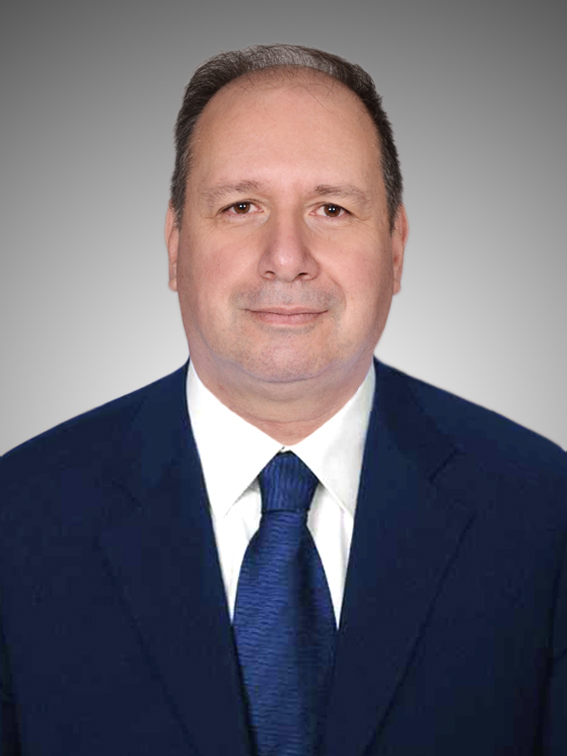
EU COST Action lead
Prof. Feza Korkusuz
I AMRegen.

Prof. Feza Korkusuz

President-Elect · Chair, SAB · Hacettepe University, Ankara

Prof. Korkusuz leads the proposed EU COST Action for I AM Regen, drawing on his experience as State Representative and Managing Board member of two COST Actions in osteoarthritis and tendon regeneration, and as a former national contact point for Horizon Europe.

View profile →

Join the Action.

Research groups, clinical centres, industry and patient organisations across Europe — and especially in Inclusiveness Target Countries — are invited to become partners in the network.